-
What happened?
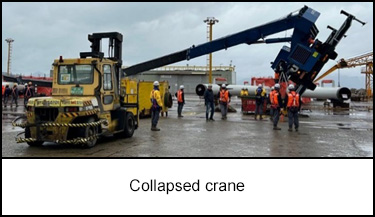
A hydro-crane was used to lift a 250 kg (551.2 lbs) weather-shelter. The crane was positioned too far from the load, requiring full boom extension plus luffing-jib use, which extended the lift radius beyond the safe working limit.
A safety device that monitors real-time safe working capacity was bypassed and as a result, the lift exceeded the crane’s safe operating capacity.
As the load was lifted, the crane destabilised and the crane toppled. The operator attempted to regain balance by lowering the load and raising the boom, which accelerated the collapse.
No exclusion zone or perimeter barriers were installed beyond the immediate area of the load and the trajectory of the falling boom/hook was outside what had been considered as the “lift-zone.” Visibility between the crane operator and signallers was obstructed by structural braces.
A worker had entered the unintended fall path just as the crane collapsed and was struck by the boom and fatally injured.
-
Why did it happen?
The lift was considered “small and routine,” so formal procedures (lifting plan, permit-to-work, formal exclusion zone) were bypassed or unknown to those involved.
Competence and procedural compliance were inadequate: signallers lacked mandatory training; crane operator had not completed required site-specific induction, tag lines and proper rigging protocols were not used and the overload limiting device was disabled.
Organisational and supervisory control was insufficient. There was no clear responsibility for crane placement or method selection and no enforced standard for safe crane setup and dispatch.
Area control was inadequate with no physical barriers or effective zone definition to prevent unauthorised entry into crane fall path.

-
What did they learn?
A yard-wide stand-down was enforced and safety briefings given to all personnel (> 2,300 workers) to share lessons and reinforce awareness.
All hydro, crawler, and sky-crane lifts procedures were revised and now require a written Lifting Plan and Permit-to-Work (PTW), plus pre-lift toolbox talk (TBM) using a dedicated log sheet.
Mandatory crane-operator dispatch process was updated to include project safety induction, special crane-use training, and a signed safety pledge before crane use.
Revised risk assessments (RAMS) for lifts involving weather shelters.
New exclusion-zone controls: use of visible barricades (rope-based, high-visibility), defined lift-area boundaries, and strictly controlled access during lifts.
Reinforced use of safety devices: overload-limiter mandatory, disabling switch taped or locked; taglines required). Crane setup standards strengthened - outriggers must be fully extended, and crane positioning relative to load must be verified against layout plan attached to PTW request.
Pre-dispatch inspection checklist revised to include verification of overload-limiter and correct boom/radius/load combination per crane spec chart.

-
Ask yourself or your crew
Is this job truly “routine”? Or does it still warrant a proper lifting plan, specific risk assessment, and/or permit?
Do we have trained, competent and briefed personnel (operator, signaller, supervisor) for every lift?
Is the exclusion zone around the lift properly thought out, including potential drop or swing zones, not just directly under the load?
Are safety devices (overload limiter, ACS, taglines) in place and functional and is there a firm policy to never bypass them?
Is crane setup (position, radius, boom angle, outrigger deployment) checked and documented before a lift?
Have you followed the relevant “Always ensure the required plans and permits are in place before a job” G+ Lifesaving Rule?

Add to homescreen
Content name
Select existing category:
Content name
New collection
Edit collection

What happened?
A hydro-crane was used to lift a 250 kg (551.2 lbs) weather-shelter. The crane was positioned too far from the load, requiring full boom extension plus luffing-jib use, which extended the lift radius beyond the safe working limit.
A safety device that monitors real-time safe working capacity was bypassed and as a result, the lift exceeded the crane’s safe operating capacity.
As the load was lifted, the crane destabilised and the crane toppled. The operator attempted to regain balance by lowering the load and raising the boom, which accelerated the collapse.
No exclusion zone or perimeter barriers were installed beyond the immediate area of the load and the trajectory of the falling boom/hook was outside what had been considered as the “lift-zone.” Visibility between the crane operator and signallers was obstructed by structural braces.
A worker had entered the unintended fall path just as the crane collapsed and was struck by the boom and fatally injured.

Why did it happen?
The lift was considered “small and routine,” so formal procedures (lifting plan, permit-to-work, formal exclusion zone) were bypassed or unknown to those involved.
Competence and procedural compliance were inadequate: signallers lacked mandatory training; crane operator had not completed required site-specific induction, tag lines and proper rigging protocols were not used and the overload limiting device was disabled.
Organisational and supervisory control was insufficient. There was no clear responsibility for crane placement or method selection and no enforced standard for safe crane setup and dispatch.
Area control was inadequate with no physical barriers or effective zone definition to prevent unauthorised entry into crane fall path.

What did they learn?
A yard-wide stand-down was enforced and safety briefings given to all personnel (> 2,300 workers) to share lessons and reinforce awareness.
All hydro, crawler, and sky-crane lifts procedures were revised and now require a written Lifting Plan and Permit-to-Work (PTW), plus pre-lift toolbox talk (TBM) using a dedicated log sheet.
Mandatory crane-operator dispatch process was updated to include project safety induction, special crane-use training, and a signed safety pledge before crane use.
Revised risk assessments (RAMS) for lifts involving weather shelters.
New exclusion-zone controls: use of visible barricades (rope-based, high-visibility), defined lift-area boundaries, and strictly controlled access during lifts.
Reinforced use of safety devices: overload-limiter mandatory, disabling switch taped or locked; taglines required). Crane setup standards strengthened - outriggers must be fully extended, and crane positioning relative to load must be verified against layout plan attached to PTW request.
Pre-dispatch inspection checklist revised to include verification of overload-limiter and correct boom/radius/load combination per crane spec chart.

Ask yourself or your crew
Is this job truly “routine”? Or does it still warrant a proper lifting plan, specific risk assessment, and/or permit?
Do we have trained, competent and briefed personnel (operator, signaller, supervisor) for every lift?
Is the exclusion zone around the lift properly thought out, including potential drop or swing zones, not just directly under the load?
Are safety devices (overload limiter, ACS, taglines) in place and functional and is there a firm policy to never bypass them?
Is crane setup (position, radius, boom angle, outrigger deployment) checked and documented before a lift?
Have you followed the relevant “Always ensure the required plans and permits are in place before a job” G+ Lifesaving Rule?
A crane lift exceeded safe limits and toppled, and its falling boom struck a worker who entered the area, resulting in a fatal injury.