-
What happened?
The carbon monoxide alarm in the saloon on a crew transfer vessel (CTV) activated early in the morning.
It was initially believed to be a false alarm, so the deckhand went to investigate and clear it.
Shortly after returning to the wheelhouse, a passenger reported that the alarm had activated again and carbon monoxide (CO) levels had reached 200 parts per million.
The Skipper contacted the designated person ashore (DPA) and was advised to open all windows and doors and replace the alarm battery; however, once the doors were closed again, CO levels rose again and the alarm activated for a third time.
The Skipper contacted the DPA again as the issue persisted, and the vessel returned to shore at reduced speed with all doors open.
Two technicians reported headaches and other passengers felt tired; all crew and passengers were taken to hospital for precautionary checks and were later released.
-
Why did it happen?
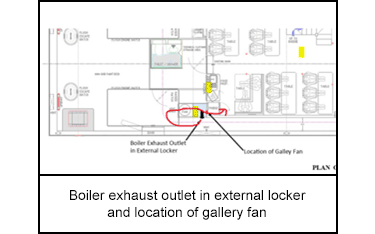
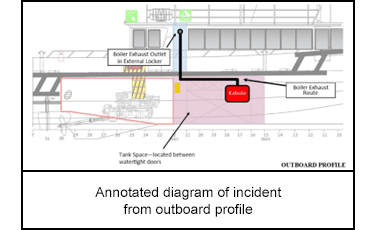
The diesel boiler on the vessel would shut down unexpectedly due to poor fuel supply to the generator, giving an incomplete combustion cycle in the boiler.
No preventative maintenance for equipment had been done. The fuel filter on the generator had also not been replaced.
Equipment environment not considered with the wrong design of ventilation used on the vessel.
Crew was not trained in handling carbon monoxide (CO) alarm. No emergency drills for CO had been done by crew (and passengers).
-
What did they learn?
Ventilation has been sealed off as the original design of the vessel allows for exhaust gas to accumulate and travel through ventilation back into the vessels saloon area.
Changing the fuel filter on the generator should have been done, according to planned maintenance system.
CO alarm procedure available and understood by skipper, crew and passengers in the event of CO exposure. As well as CO drills conducted frequently.
Familiarisation of safety measures regarding fire, carbon monoxide, and the drills relating to them.
Smoke and carbon monoxide detector tests to be conducted frequently with a handheld device. If high levels are detected, they are reported immediately.

-
Ask yourself or your crew
Are you or your team aware of any on board systems that may not have been maintained correctly?
Are you or your team trained in handling CO alarms?
Are you or your team aware of the emergency operating procedure if CO is found to be above normal levels? What is it?

Add to homescreen
Content name
Select existing category:
Content name
New collection
Edit collection

What happened?
The carbon monoxide alarm in the saloon on a crew transfer vessel (CTV) activated early in the morning.
It was initially believed to be a false alarm, so the deckhand went to investigate and clear it.
Shortly after returning to the wheelhouse, a passenger reported that the alarm had activated again and carbon monoxide (CO) levels had reached 200 parts per million.
The Skipper contacted the designated person ashore (DPA) and was advised to open all windows and doors and replace the alarm battery; however, once the doors were closed again, CO levels rose again and the alarm activated for a third time.
The Skipper contacted the DPA again as the issue persisted, and the vessel returned to shore at reduced speed with all doors open.
Two technicians reported headaches and other passengers felt tired; all crew and passengers were taken to hospital for precautionary checks and were later released.

Why did it happen?
The diesel boiler on the vessel would shut down unexpectedly due to poor fuel supply to the generator, giving an incomplete combustion cycle in the boiler.
No preventative maintenance for equipment had been done. The fuel filter on the generator had also not been replaced.
Equipment environment not considered with the wrong design of ventilation used on the vessel.
Crew was not trained in handling carbon monoxide (CO) alarm. No emergency drills for CO had been done by crew (and passengers).

What did they learn?
Ventilation has been sealed off as the original design of the vessel allows for exhaust gas to accumulate and travel through ventilation back into the vessels saloon area.
Changing the fuel filter on the generator should have been done, according to planned maintenance system.
CO alarm procedure available and understood by skipper, crew and passengers in the event of CO exposure. As well as CO drills conducted frequently.
Familiarisation of safety measures regarding fire, carbon monoxide, and the drills relating to them.
Smoke and carbon monoxide detector tests to be conducted frequently with a handheld device. If high levels are detected, they are reported immediately.

Ask yourself or your crew
Are you or your team aware of any on board systems that may not have been maintained correctly?
Are you or your team trained in handling CO alarms?
Are you or your team aware of the emergency operating procedure if CO is found to be above normal levels? What is it?
Carbon monoxide alarms repeatedly activated on a crew vessel, forcing a slow return to shore. Several onboard felt unwell, and all were taken to hospital.